
Log entry 05 — Concrete scanning & GPR
Scanning: find the steel and the conduit before the blade does
Ground-penetrating radar (GPR) sends radio pulses into concrete and reads the reflections: rebar, post-tension tendons, conduit (metal and, often, PVC), voids, and the slab's own thickness changes all show up as targets that a trained scanner marks on the surface. A scan turns “we think it's clear” into a marked map. For many cuts, it is the cheapest insurance on the whole job.
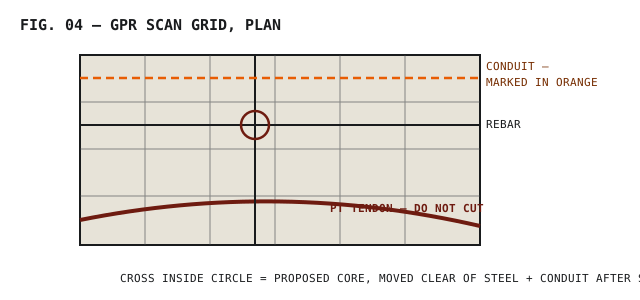
The post-tension warning, in full. Post-tensioned construction tensions high-strength steel tendons inside the slab after curing. Tendons are common in parking structures, podium and transfer slabs, some commercial floors and bridges, and occasionally in residential slabs-on-grade in newer construction. Severing a live tendon can: (1) release stored energy violently enough to eject the tendon from the slab edge, (2) remove structural capacity the design counts on — spans can crack or deflect immediately, (3) injure or kill. There is no “careful” way to core through a tendon by feel. Rule: if PT is known or suspected, the slab is scanned, tendons are marked, cuts are laid out clear of them, and structural PT work proceeds only with the engineer of record's written direction. A scanner who cannot find tendons, or an operator willing to skip the scan, ends the conversation.
What a scan visit actually delivers
- A marked surface: rebar pattern and spacing, conduit runs, tendon locations, and clear zones — painted or taped on the concrete at the time of the visit.
- A layout check: proposed hole and cut locations tested against the marks, and moved on the spot where they conflict. The best outcome of a scan is a layout that changed.
- A written report (on commercial work): scan method, grid, findings, target depths (cover), limitations, and marked-up photos or drawings for the project record.
- Honest limits: GPR reads typically the top 12–18 inches of concrete well; congested rebar can shadow deeper targets; very wet or chloride-heavy concrete attenuates signal. Where GPR cannot resolve a critical target, X-ray (radiography) is the fallback — with its own radiation-safety perimeter and scheduling. A good scan report states what it could not see.
When scanning is required, prudent, or skippable
| Situation | Scan? |
|---|---|
| Any above-grade slab, deck, or structure that could be post-tensioned | Required — no exceptions |
| Cores or cuts in commercial/industrial floors with unknown embedded conduit | Required in practice — owners and GCs mandate it |
| Multiple cores in a residential slab near radiant heat, plumbing, or prior patches | Strongly prudent — one hit costs more than the scan |
| Single small core in a known, plain, unreinforced driveway or walk | Often skippable — verify with drawings, history, and a cover meter |
| Cutting near slab edges, beams, or column lines (steel congestion) | Prudent — congestion is where surprises live |
Scanning is typically priced per visit / per area with a minimum, and as its own line item — it is a separate trade visit from the cutting itself. Fold the scan into the schedule first: cutting dates move around scan findings, never the reverse. Describe the structure's age and type in the request and the PT question is asked up front, before any cutting is discussed.